

Why Is There Oil in Oat Milk? The Hidden Ingredient

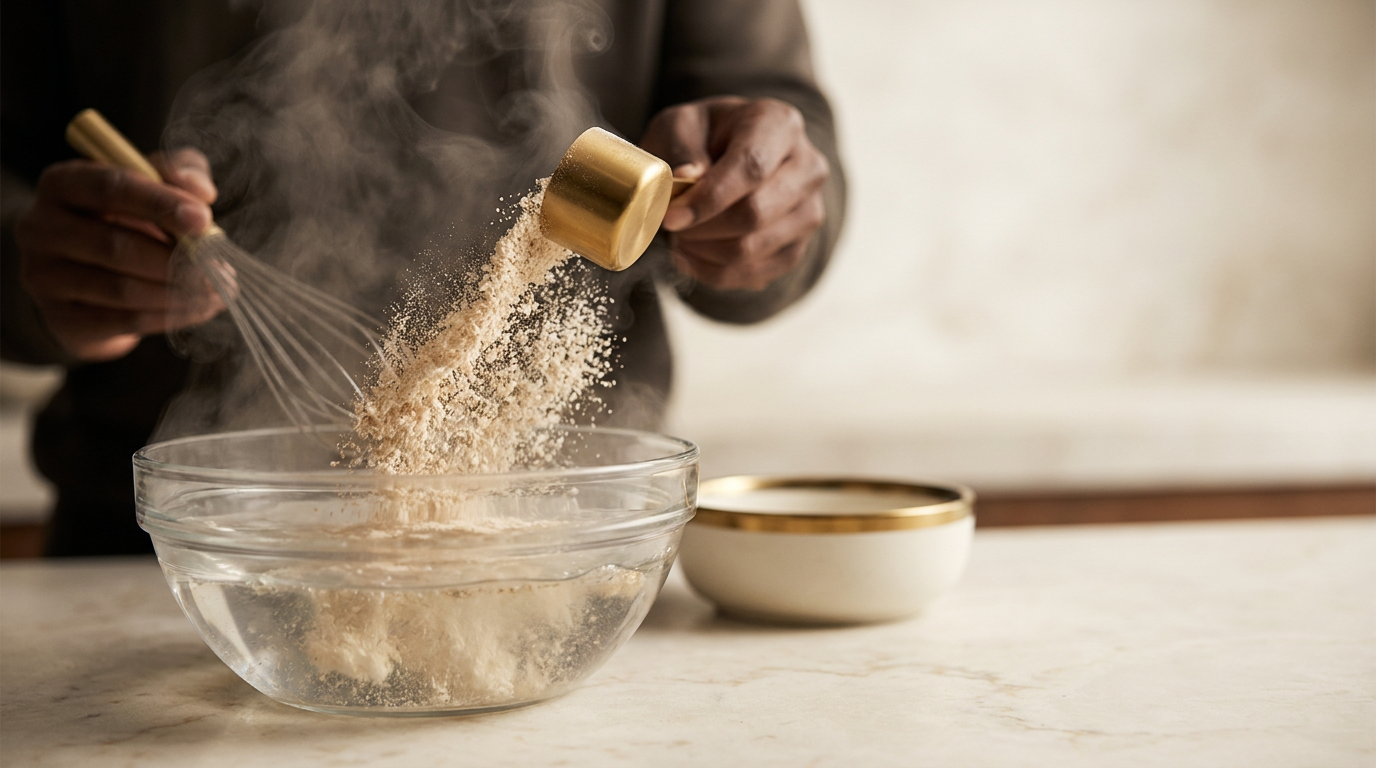
Why is there oil in your oat milk?
You read the label on a carton of oat drink and you find oil. Often rapeseed oil. Sometimes sunflower oil. You bought oats and water, so the oil feels out of place.
The oil is not an accident. It is added on purpose. It does a specific job.
This article explains what that job is. It also shows you how to read the fat content on a label. And it covers one format of oat drink that needs no oil at all.
Key Takeaways
- Most carton oat drinks contain added oil, usually rapeseed or sunflower.
- The oil works as an emulsifier. It stops the water and oat solids from separating.
- Oil also improves creaminess and helps "barista" versions foam in hot drinks.
- You can read the fat content per 100g to estimate how much oil is inside.
- Oat drink made from powder needs no added oil to stay stable.
The short answer: oil keeps the drink together
Carton oat drink is a mix of water and oat solids. These two parts do not naturally stay combined. Over time they separate. The water sinks. The oat solids rise or settle.
Added oil fixes this. It acts as an emulsifier. It binds the water and oat solids into one smooth liquid that lasts for months on a shelf.
One oat drink maker explains the choice of oil plainly.
"Rapeseed oil is the most common seed oil added to oat milk as it contains relatively few saturated fats and is a cheap and widely available ingredient. Sunflower oil is also common in oat milk and similarly low cost and widely available." — Overherd, _Oat milk manufacturer and blog author_
So the oil is chosen for two reasons. It does the job. And it costs little.
What oil actually does in oat milk
Oil performs more than one function in a carton. Let us look at each one.
1. It stops separation
This is the main reason. A platform that explains biology topics describes the mechanism clearly.
"Sunflower oil is included in oat milk primarily for functional reasons related to texture and stability. Oat milk is essentially an emulsion of water and oat solids, and without an additive, these two components would naturally separate over time. The oil acts as an emulsifier, ensuring the product remains uniform and smooth throughout its shelf life." — Biology Insights, _A platform dedicated to exploring various biological topics and their implications for health and daily life_
Without an emulsifier of some kind, a carton would separate on the shelf. You would see a watery layer and an oat layer. Shaking helps, but only for a moment.
This is a common complaint with cartons that use less stabiliser.
"Every time I shake the carton before pouring it separates again within about 30 seconds. So I have to shake it before every single pour. Small thing but gets annoying fast."
2. It improves creaminess
Fat changes how a drink feels in your mouth. A small amount of oil makes the drink feel richer and rounder.
"The addition of a small amount of fat also significantly improves the product's creaminess and mouthfeel, making it a more satisfying substitute for dairy milk. This is particularly important for 'Barista' style oat milks, where the oil helps the product foam and steam consistently when added to hot beverages like coffee." — Biology Insights, _A platform dedicated to exploring various biological topics and their implications for health and daily life_
This is why "barista" versions taste creamier than basic ones. More fat means more body.
3. It helps foam in coffee
Foam needs fat and protein to hold its structure. The oil in a barista version helps the foam form and last.
Brands often use a specific type of oil for this. The biology platform notes the common choice.
"The type most often utilized by commercial oat milk producers is high-oleic sunflower oil. This variety is predominantly made up of monounsaturated fats, specifically oleic acid (Omega-9), giving it a fat profile similar to olive oil. High-oleic oil is preferred because it offers greater stability and a longer shelf life." — Biology Insights, _A platform dedicated to exploring various biological topics and their implications for health and daily life_
So the oil is not random. It is selected to stay stable for a long time on a shelf.
Why barista versions contain the most oil
Not every carton has the same amount of oil. The amount changes by product type.
The same oat drink maker explains the pattern.
"Oat milk which is marked as 'whole' or 'barista' typically contains the most oil, whilst 'skinny' or 'low-fat' varieties contain less oil. The best way to see how much oil is in your oat milk is to check the nutritional label, those with a higher fat content per 100g will likely contain more oil than a lower fat content per 100g." — Overherd, _Oat milk manufacturer and blog author_
This gives you a simple rule. Higher fat per 100g usually means more added oil. Oats themselves contain only a little fat. So most of the fat on a barista label comes from the oil that was added.
| Carton type | Typical fat level | Likely oil content |
|---|---|---|
| Skinny / low-fat | Low | Less oil |
| Standard | Medium | Some oil |
| Whole / barista | Higher | More oil |
How to spot oil on a label
You do not need to be a food scientist. Three checks tell you most of what you need.
1. Read the ingredient list. Look for "rapeseed oil", "sunflower oil", or "high-oleic sunflower oil". If it is there, oil was added. 2. Check the fat per 100g. Oats alone give a low fat figure. A higher figure points to added oil. We explain how to read a full label in our guide to reading an oat milk label honestly. 3. Note the position in the list. Ingredients appear in order of weight. Oil near the top means more of it.This is also why some people feel overwhelmed by oat drink labels.
"The ingredient list has 12 things on it. Twelve. For an oat drink. I cannot even pronounce half of them. Why does oat milk need locust bean gum."
Oil is often only one item among several. Gums and stabilisers frequently join it. We cover the wider mix in our breakdown of why rapeseed oil ends up in oat milk.
Is the oil a problem?
This is a fair question. The honest answer is: it depends on what you want.
The oils used are common cooking oils. They are not dangerous in normal amounts. Many people drink them every day without concern.
The issue for most label readers is different. They want a short, simple ingredient list. They bought oats and water. They did not expect to add oil to their diet through a drink.
There is also the food waste angle. An opened carton spoils within a few days. We explain this in detail in our guide on whether oat drink can go bad and how to store it.
So the oil is not a health alarm. It is a question of preference. If you want oat and nothing else, oil is one ingredient too many.
The oat drink format that needs no oil
Here is the part most articles miss. Oil solves a problem that only exists in cartons.
A carton must stay stable for months while it sits on a shelf. That is why it needs an emulsifier. Powder does not have this problem.
OATENTIK is oat drink powder. It contains two things only. Organic gluten-free oats and a natural enzyme. The enzyme breaks oat starch into natural sweetness and creaminess. There is no added oil, no gums, no emulsifiers, and no added sugar.
You mix the powder with water when you want a drink. There is no shelf life problem to solve because the drink is made fresh each time. Nothing needs to hold an emulsion together for months. So nothing needs added oil.
The powder also handles heat. It does not split in hot coffee the way some cartons do. You can read more about the science behind two-ingredient oat drink if you want the full mechanism.
One pouch makes 8 liters. A single pouch weighs 17g. That replaces the 240g of packaging you would use across eight cartons. That is a side benefit, not the main point. The main point is simpler. With powder, you mix fresh and you skip the oil entirely.
You can try the organic oat drink powder and read the full ingredient list before you decide.
Frequently Asked Questions
Why is there oil in oat milk?
Oil is added to carton oat drink to work as an emulsifier. It stops the water and oat solids from separating during the months a carton sits on a shelf. Oil also improves creaminess and helps barista versions foam in coffee.
Which oils are used in oat milk?
The most common are rapeseed oil and sunflower oil. Both are cheap and widely available. Many barista versions use high-oleic sunflower oil because it stays stable for a long time.
Does all oat milk contain oil?
No. Some oat drinks are made without added oil. Powder-based oat drink, for example, needs no oil because it is mixed fresh and does not have to hold an emulsion together for months. Always check the ingredient list to be sure.
How can I tell how much oil is in my oat milk?
Check the fat content per 100g on the nutrition panel. Oats alone contain little fat, so a higher fat figure usually means more added oil. Then read the ingredient list to confirm which oil was used.
Is the oil in oat milk bad for you?
The oils used are common cooking oils and are not harmful in normal amounts. The concern for most people is preference, not safety. If you want a short ingredient list of oats and water only, oil is one extra ingredient you may want to avoid.
OATENTIK uses only organic oats and a natural enzyme. No oils. No gums. No added sugar. Try it →
Disclosure: OATENTIK is our product. We have included it in this comparison because it fits the category. We aim to be fair and objective in all comparisons.
Sources & Methodology
All ingredient data was sourced from official product packaging and brand websites as of 2026-06-15. Prices reflect publicly available retail prices at time of writing.
We update this article regularly. Last updated: 2026-06-15.
Found an inaccuracy? Let us know.