

Oat Milk Without Additives: The Clean Alternative

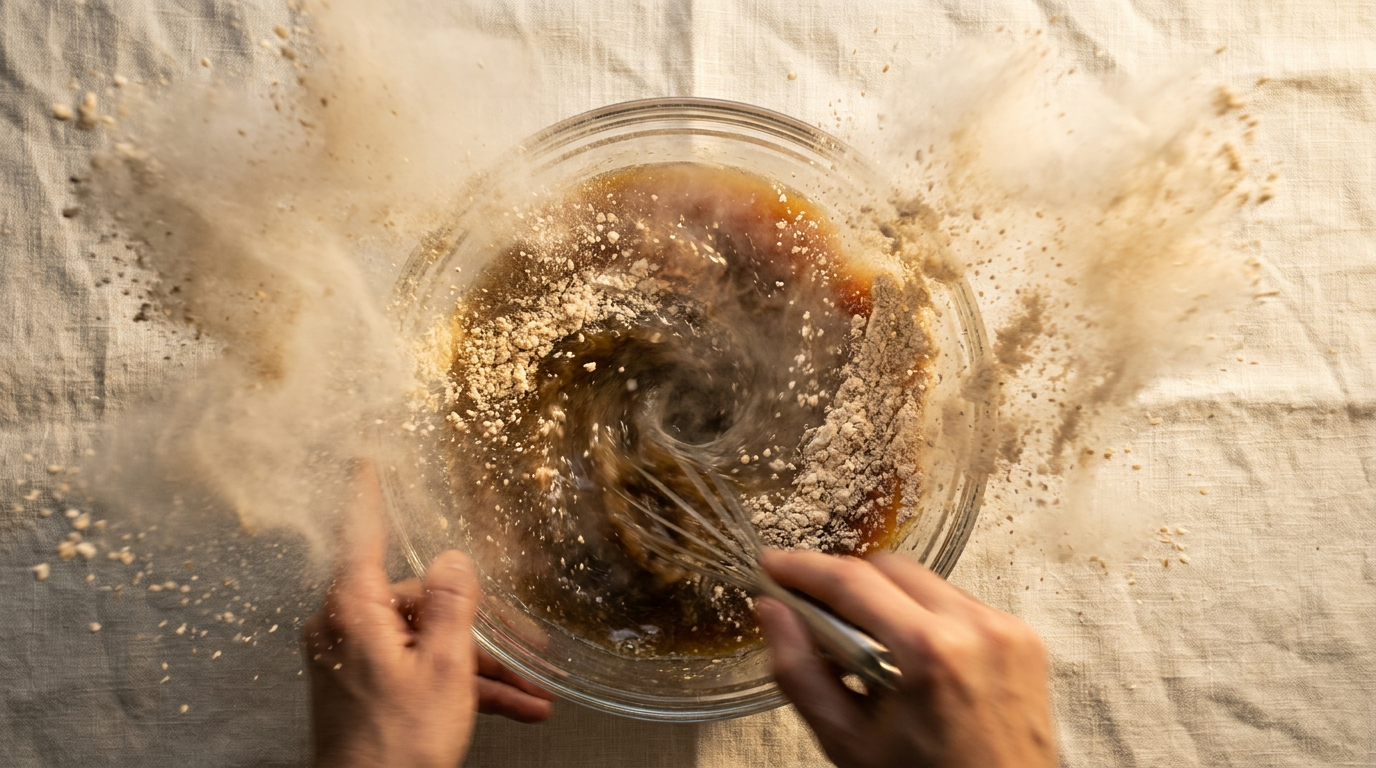
Why "additive-free" oat milk is so hard to trust
You read labels. You have been doing it for a while. And you have probably noticed a pattern.
A carton says "simple" or "clean" on the front. Then you turn it over. There is an oil. There is a gum. There is something with a chemical-sounding name you have to look up.
This is the core problem with the search for an oat milk alternative without additives. The front of the pack is marketing. The ingredient list is the truth. They do not always agree.
One label reader put the frustration plainly:
"The ingredient list keeps changing. Last year it was simpler. Now there's dipotassium phosphate, locust bean gum. Why do they keep adding stuff?" — verified customer review
That feeling is reasonable. So this guide does not ask you to trust another claim. It gives you a method to verify one yourself.
Key Takeaways
- "Clean" and "natural" on the front of a carton are not regulated promises. The ingredient list is the only source of truth.
- Most carton oat drinks contain at least one oil, one stabiliser, or one acidity regulator. These serve a real function.
- Barista versions often contain more additives than the standard version, not fewer.
- An oat drink with zero additives usually has a very short ingredient list. Two or three items, not ten.
- OATENTIK oat drink powder contains organic gluten-free oats and one natural enzyme. Nothing else.
What actually counts as an "additive"
Before you can avoid additives, you need a clear definition. Otherwise marketing language fills the gap.
For this guide, an additive is any ingredient added to oat drink that is not oats and not water. That includes oils, gums, emulsifiers, stabilisers, acidity regulators, added salt, added sugar, and added vitamins or minerals.
None of these are dangerous in normal amounts. Most exist for a practical reason. But if your goal is an oat drink without additives, you need to recognise them. Here is what each one does.
A manufacturer that produces oat milk explains the role of stabilisers clearly:
"Stabilisers and gums are used to maintain the integrity of oat milk by preventing ingredient separation. By thickening the liquid, stabilisers can also improve the mouthfeel of oat milk and ensure a smooth, homogeneous texture." — Overherd, _Oat milk manufacturer and blog author_
The same source describes emulsifiers and oils.
"Emulsifiers facilitate the blending of oil and water in oat milk, preventing oil separation and ensuring a consistent, well-integrated mixture. This enhances the overall creamy texture and mouthfeel of the beverage." — Overherd, _Oat milk manufacturer and blog author_
"Oils are often incorporated to impart creaminess and enrich the flavour profile of an oat milk. They contribute to the smooth texture of the final product, but are not always a healthy addition." — Overherd, _Oat milk manufacturer and blog author_
So the additives are not random. They solve problems. Liquid oat drink separates. It can split in hot coffee. It can taste thin. Oils, gums, and emulsifiers patch those problems.
This matters for your search. An additive-free liquid oat drink has to solve those same problems some other way, or accept them.
The verification checklist
Here is the practical part. Use this every time you pick up a carton. It takes about thirty seconds.
Step 1: Ignore the front of the pack. "Clean", "simple", "natural", and "no nasties" are marketing words. They have no legal definition for plant drinks. Turn the carton around. Step 2: Read the full ingredient list, not the first three items. Brands list ingredients by weight. The additives often sit at the bottom in small percentages. Read to the end. Step 3: Count the non-oat, non-water ingredients. Water and oats are expected. Everything else is an addition. A truly additive-free oat drink has nothing else, or close to it. Step 4: Look for these specific words.- Oils: rapeseed oil, sunflower oil, canola oil
- Gums: gellan gum, locust bean gum, guar gum, xanthan gum
- Emulsifiers: sunflower lecithin, soy lecithin
- Acidity regulators: dipotassium phosphate
- Added salt and added sugar
"Oat milk can contain added sugars, depending on the brand, though it's best to choose one without added sugar. What's more, due to the processing of oat milk, the Food and Drug Administration labeling laws require that added sugar be listed on oat milk even without the addition of sugar-containing ingredients. This is because in some cases the processing of oats creates sugar." — Michelle Saari, M.Sc., RD
So a sugar figure on the label is not automatically a red flag. The question is whether the ingredient list names "sugar" as an added item. If it does not, the sugar comes from the oats themselves. We explain why oat processing creates natural sweetness in our guide to how oat drink is made.
Acidity regulators are worth a closer look, because they often appear in coffee-friendly products:
"Acidity regulators are used to control the pH level of oat milk, thus extending its shelf life and preventing spoilage. They are also useful in preventing curdling when oat milk is mixed with acidic substances like coffee." — Overherd, _Oat milk manufacturer and blog author_
That single quote explains a lot. The carton that does not split in your coffee often has a pH-controlling additive doing that work.
The barista trap
Here is the pattern that frustrates label readers the most. The cleaner version foams badly. The version that foams well has more additives.
A customer described the exact bind:
"The barista version has more additives than the regular version to make it foam. So I either get bad foam with clean ingredients or decent foam with more junk. Can't win." — verified customer review
This is not a marketing trick gone wrong. It is physics. Stable foam in liquid oat drink usually needs added oil and an emulsifier to hold the structure. Remove those, and the foam collapses faster.
Another reader hit the labelling side of the same problem:
"Why does it say oat milk on the front but then I read the label and there is rapeseed oil and sunflower lecithin in there. I thought I was buying oats." — verified customer review
A registered dietitian gives the only reliable advice here:
"If you want to avoid emulsifiers and gums, check the label of the oat milk you're purchasing, as these ingredients can vary significantly among brands." — Lara Clevenger, RDN
Variation between brands is the whole reason a checklist beats a brand recommendation. The same brand can change its recipe between batches. We cover one common addition in detail in our breakdown of why there is rapeseed oil in oat milk.
The market is moving in this direction. One ingredient supplier noted the shift among shoppers:
"Plant-based beverages continue to grow in popularity. As a result, consumers are becoming more aware of the ingredients used to produce these dairy alternative drinks. Many consumers seek plant-based beverages with a clean label and minimal ingredients." — fiberstar-admin, _Author for Fiberstar, Inc._
You are not an outlier. You are the trend.
What a genuine additive-free oat drink looks like
Apply the checklist to enough products and a clear picture forms. A real additive-free oat drink has a short ingredient list. Oats and water. Sometimes one functional ingredient. That is the shape you are looking for.
This is also where format matters. Liquid oat drink has to survive months in a carton on a shelf. That shelf life is part of why additives appear. The product needs to stay stable, stay mixed, and not spoil.
Powder changes the equation. There is no liquid sitting in a carton, so there is less to stabilise. You mix it fresh, with water, when you want it.
A long-time home oat drink maker described moving to this format:
"Been making oat drink from scratch with a blender and nut milk bag for 2 years. It was fine but took 20 minutes and the mess was real. Tried the powder version and I genuinely cannot go back. Same clean ingredients, done in 30 seconds." — verified customer review
OATENTIK oat drink powder contains two things. Organic gluten-free oats grown in the EU. And a natural enzyme called amylase. The enzyme breaks down the oat starch during production. This creates the natural sweetness and the texture. Then the oat drink is spray-dried into powder.
There is no oil. There is no gum. There is no emulsifier. There is no acidity regulator. There is no added sugar. The sweetness on the label comes from the oats, broken down by the enzyme, exactly as the dietitian above described for natural oat processing.
This also avoids the barista trap in a different way. Instead of adding oil and lecithin to force foam into a thin liquid, you adjust the mix ratio. A thicker mix steams and froths better at higher powder-to-water ratios. You control the result.
There is a smaller bonus too. One 800g pouch makes 8 litres of oat drink. That is 17g of packaging instead of roughly 240g of carton material for the same volume, around 93% less. You also stop discarding half-finished cartons that spoil before you finish them.
If you want to see the full ingredient logic, we explain the science behind the two-ingredient oat drink separately.
Frequently asked questions
What is the cleanest oat milk with no additives?
The cleanest oat drinks have the shortest ingredient lists. Look for products listing only oats and water, or oats and water with one natural functional ingredient. Avoid lists with oils, gums, emulsifiers, or acidity regulators. Because recipes vary by brand and change over time, the label is more reliable than any brand name.
Does oat milk really need additives?
Liquid oat drink uses additives to solve real problems. Oils and emulsifiers add creaminess and stop oil separating. Gums and stabilisers stop the layers separating and improve texture. Acidity regulators stop curdling in coffee and extend shelf life. None are harmful in normal amounts. But an oat drink can avoid them if it accepts a shorter shelf life or uses a different format, such as powder you mix fresh.
Why does oat milk show sugar if there is no added sugar?
Processing oats can create natural sugars. Enzymes break oat starch into simpler sugars, which then appear on the nutrition panel. This is naturally occurring sugar, not added sugar. Check the ingredient list. If it does not name "sugar" as an ingredient, the sugar comes from the oats themselves.
Is barista oat milk worse for additives than regular?
Often yes. Barista versions are formulated to foam and to resist splitting in hot coffee. That stability usually needs added oil, emulsifiers, or acidity regulators. So a barista carton can contain more additives than the standard version, not fewer. Always compare both ingredient lists before assuming the barista option is cleaner.
How do I get foam without additives?
Stable foam in liquid oat drink usually relies on added oil and an emulsifier. Without them, foam collapses faster. A powder format lets you increase the mix ratio for a thicker base that steams and froths better. A handheld frother also helps. You trade automatic stability for control over the result.
OATENTIK uses only organic oats and a natural enzyme. No oils. No gums. No added sugar. Try it →
Disclosure: OATENTIK is our product. We have included it in this comparison because it fits the category. We aim to be fair and objective in all comparisons.
Sources & Methodology
All ingredient data was sourced from official product packaging and brand websites as of 2026-06-12. Prices reflect publicly available retail prices at time of writing.
We update this article regularly. Last updated: 2026-06-12.
Found an inaccuracy? Let us know.