








How OATENTIK Works: The Science Behind 2-Ingredient Oat Drink


The Two-Ingredient Problem
Read the back of almost any oat drink carton. You will find oats, water, oil, salt, gums, stabilisers, and a list of added vitamins. One customer summed up the frustration well.
"Why does it say oat milk on the front but then I read the label and there is rapeseed oil and sunflower lecithin in there. I thought I was buying oats."
OATENTIK has two ingredients. Organic gluten-free oats. And one natural enzyme called α-amylase. That is the entire formula.
This raises a reasonable question. If oat drinks normally need oils and gums to taste right, how does a two-ingredient powder produce a creamy, naturally sweet drink? The answer is not a marketing trick. It is a food science process called enzymatic hydrolysis. This article explains exactly how it works.
What Enzymatic Hydrolysis Actually Is
Hydrolysis means breaking a molecule by adding water. Enzymatic hydrolysis uses enzymes to do that breaking in a controlled way. Enzymes are proteins that act as catalysts. They speed up specific reactions without becoming part of the final product.
In oat drink production, the target molecule is starch. Oats are roughly 60% starch by weight. Starch is a long chain of glucose units bonded together. On its own, starch is bland, dense, and gluey in water. That is why raw blended oats taste like wet flour.
The enzyme used here is α-amylase. It is the same family of enzyme your own saliva produces when you chew bread. Your mouth starts breaking down starch into sweeter sugars within seconds. The reason a cracker becomes sweet if you hold it on your tongue is α-amylase at work.
In a factory, the same reaction is run on a larger scale and at a precise temperature. The result is a liquid where most of the starch has been converted into smaller carbohydrates called maltose, maltotriose, and short dextrins. These taste mildly sweet and behave very differently from starch in water.
Researchers at Henan University of Technology describe the underlying challenge clearly.
"Plant-based milk beverages, particularly oat milk, recently have gained popularity. However, due to their high starch content, these milk beverages made from oat flour or other grain flour are faced with the technological challenge of poor stability." — LIANG Qin, MA Wenhua, SUN Binghua, WANG Xiaoxi, _College of Food Science and Engineering, Henan University of Technology_
Without an enzyme step, oat starch separates, settles, and turns gluey when heated. Hydrolysis solves that problem at the molecular level rather than masking it with thickeners and emulsifiers later.
Why α-Amylase Is the Key Enzyme
There are many enzymes in food science. The reason α-amylase is the one used for oat drinks comes down to what it does to starch chains.
An enzyme manufacturer that supplies the food industry describes it well.
"The most important enzyme in the process is amylase, which acts like a molecular scalpel, chopping up long chains of starch into smaller, sugar-like fragments. This not only tames the naturally sticky texture of oat milk but also adds a gentle sweetness, all without adding sugar." — Biocatalysts, _Enzyme manufacturer_
Three things happen at the same time.
- Texture changes. Long starch chains thicken liquids. Short fragments do not. The drink becomes fluid instead of gluey.
- Sweetness develops. Maltose tastes about a third as sweet as table sugar. Short dextrins add body without sweetness. Together they create gentle, balanced flavour.
- Stability improves. Smaller carbohydrate fragments stay suspended in water. They do not settle to the bottom or split in hot coffee.
This is why an enzymatic process replaces the need for several additives at once. The same enzyme does the work that oils, gums, and added sugar do in conventional oat drinks. Just less elegantly.
The process is also documented in food technology patents. One filing from Novozymes describes the underlying method.
"The present invention relates to use of enzymes having alpha-amylase activity for obtaining a hydrolysed oat material." — Alessandro Palumbo, Benjamin Thieringer, _Inventors, Novozymes AS_
So enzymatic hydrolysis of oats is not novel. It is a well-established food science technique. What varies between brands is how clean the formula stays after the enzyme has done its job.
Why Most Oat Drinks Still Need Additives
If enzymatic hydrolysis is so effective, why do most carton oat drinks still contain rapeseed oil, gums, and stabilisers?
The honest answer is a mix of cost, shelf life, and format. Liquid cartons sit on supermarket shelves for months and travel through warm distribution networks. Manufacturers add oils to boost mouthfeel and froth. They add gums to prevent settling. They add stabilisers to keep everything blended. They add salt and flavourings to compensate for what the enzyme step alone does not deliver.
A customer wrote a review that captures the trade-off perfectly.
"The barista version has more additives than the regular version to make it foam. So I either get bad foam with clean ingredients or decent foam with more junk. Can't win."
That trade-off exists because liquid format constrains the formula. A powder format does not face the same constraints. The drink is mixed fresh by the consumer, used within three days, and never sits in a warehouse as liquid. So the formula can stop after the enzyme step.
Where Sweetness Comes From (And Why It Is Not "Added Sugar")
OATENTIK contains 20.8g of sugar per 100g of powder. Per serving (20g of powder mixed with 200ml of water), that is 4.2g of sugar. This number sometimes confuses people who read the nutrition label.
Here is the important distinction. Those sugars are not added. They are created from the oat starch itself by the enzyme.
The starting material is starch, which is technically a long chain of glucose. When α-amylase breaks that chain, it releases shorter fragments including maltose (two glucose units bonded together). Maltose registers as "sugar" on the nutrition panel because the EU regulation defines sugars to include mono- and disaccharides regardless of origin.
So the number is real, but it is the same carbohydrate that was already inside the oat. The enzyme rearranged it. Nothing came from outside the oat. No cane sugar, no syrups, no concentrates.
This is why the Biocatalysts statement holds true: gentle sweetness, all without adding sugar. The starch you would have digested anyway is simply pre-broken into a form your tongue can taste.
If you want a deeper read on how oat sugars behave in the body, we covered the topic in our piece on whether oats spike blood sugar.
Where Creaminess Comes From Without Oil or Gums
The mechanistic question here is simple. If there is no added oil and no added gum, what produces the creamy texture?
Three things contribute.
1. Residual dextrins. Hydrolysis does not break every starch chain down to maltose. A fraction of medium-length dextrins remain. These add body in the mouth without thickening the liquid into glue. They are the carbohydrate equivalent of "viscosity without slime". 2. Native oat fat. Oats naturally contain about 6% fat (4.8g per 100g of OATENTIK powder, of which 2.2g is monounsaturated). This is enough to give a soft, rounded mouthfeel. Most carton oat drinks dilute the natural oat fat heavily with water, which is why they add rapeseed oil to compensate. A powder mixed fresh keeps a higher concentration of native oat fat per cup. 3. Particle suspension. Spray-dried oat powder produces fine particles that disperse in water and stay suspended without settling. The mouth reads this as smoothness rather than grittiness.None of these mechanisms require coconut oil, sunflower lecithin, gellan gum, or dipotassium phosphate. Those ingredients exist in conventional formulas to solve problems that the powder format does not have.
From Liquid to Powder: The Spray Drying Step
After enzymatic hydrolysis, the resulting liquid is concentrated and spray-dried. Spray drying is a standard food technology used for milk powder, coffee, and many other products.
The hydrolysed oat liquid is sprayed through a nozzle into a tower of hot air. The water evaporates almost instantly. What falls to the bottom is a fine, dry powder that contains all the carbohydrates, fats, fibre, protein, and naturally formed sugars from the original oat liquid.
This step is what allows the product to be:
- Shelf-stable for 24 months at room temperature.
- Compact enough that 800g of powder reconstitutes into 8 litres of drink.
- Free from preservatives. There is no water for microbes to grow in.
- Light to ship. You are not paying for water to be moved across Europe.
Modern enzyme blends have made this whole sequence more efficient. As Biocatalysts notes:
"Thanks to modern enzyme blends, producers can now make oat milk more efficiently than ever. New technologies allow multiple steps like starch breakdown and flavour development to happen at once, saving both time and energy." — Biocatalysts, _Enzyme manufacturer_
For a broader look at the production sequence used across the industry, our overview of how oat drinks are made covers the upstream and downstream steps.
What This Means in Your Cup
The mechanics matter because they translate into how the drink behaves when you actually use it.
| Property | Cause | Result |
|---|---|---|
| Stays stable in hot coffee | Short dextrins do not coagulate at high temperature | No curdling at typical espresso pH |
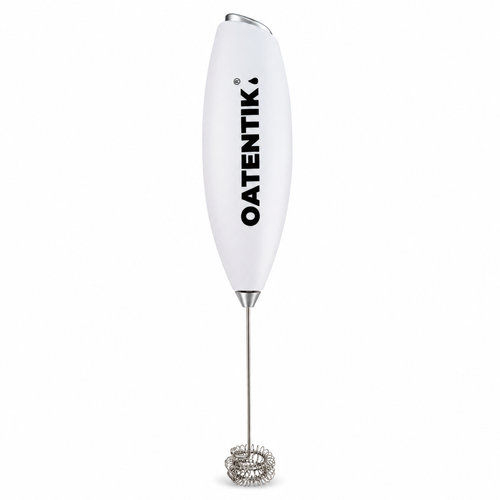
| Froths with a frother | Native oat fat and dextrins build foam structure | Steams and froths well at higher mix ratios |
| Naturally sweet without added sugar | Maltose from hydrolysed starch | Around 4.2g of natural sugar per serving |
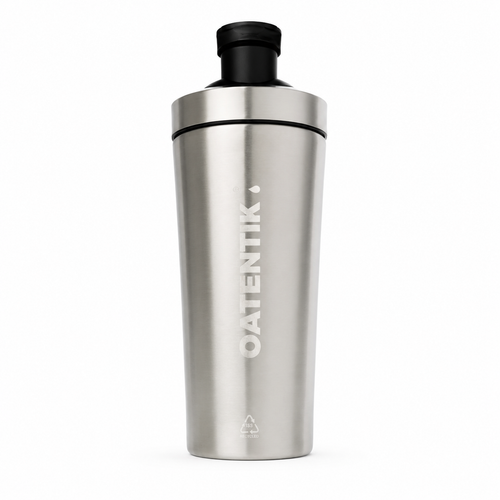
| Dissolves cleanly in cold water | Fine spray-dried particles | Mixes in seconds in a shaker |
| Shelf-stable | Powder format, no free water | 24 months unopened, use within 3 days once mixed |
Researchers studying functional beverages have pointed out why this format is gaining traction.
"Plant-based or non-dairy milk substitutes are becoming favored in the growing field of functional beverages driven by factors such as health benefits, allergies, lactose intolerance, and the rise in vegan diets." — Maria Priska Angelina Pek, Desak Putu Ariska Pradnya Dewi, _i3L University, Jakarta, Indonesia_
The two-ingredient powder format is one answer to that demand. The enzymatic step does the heavy lifting that additives normally do.
One customer who used to make oat drink at home put it simply.
"Been making oat drink from scratch with a blender and nut milk bag for 2 years. It was fine but took 20 minutes and the mess was real. Tried the powder version and I genuinely cannot go back. Same clean ingredients, done in 30 seconds."
That comparison is fair. Home-blended oat drink uses the same starting ingredients but without the enzyme step. The mouthfeel is usually thinner or gluier, the shelf life is two to three days in the fridge, and the volume is limited by what your blender can hold. The enzymatic process plus spray drying does what a home blender cannot.
One more bonus worth mentioning. Because the product ships as powder, the packaging weighs 17g per pouch instead of around 240g of cartons for the same 8 litres. That is 93% less packaging material moved per litre of dr
ink. Not the main reason to consider it, but a real one.
A Note on What We Can and Cannot Claim
Oats naturally contain beta-glucan, a soluble fibre that has been studied extensively for its effects on cholesterol and blood sugar. OATENTIK contains organic oats. We have not lab-tested the specific beta-glucan content per serving, so we do not claim a number. The enzymatic hydrolysis step is designed to break down starch, not fibre, so the fibre content of the original oat is largely preserved (2.0g per 100g of powder on our spec sheet).
For more on oats as an ingredient and the research behind them, we covered the topic in our deep dive on oat nutrition and in the evidence-backed reasons oats deserve a place in your cup.
FAQ
Is α-amylase an additive? No. α-amylase is a processing aid, not an ingredient in the final product. It does its job during production and is largely deactivated and removed before spray drying. Due to processing, minimal residual enzyme activity may be present, which is normal for hydrolysed oat products. It does not appear on the nutrition panel because it is not a nutritional component. Is the sugar in OATENTIK added sugar? No. The 4.2g of sugar per serving comes from the oat starch itself, broken down by α-amylase into shorter sugars including maltose. No cane sugar, syrup, or sweetener is added. The same carbohydrate was present in the oat to begin with, in a different chemical form. Why does the drink taste sweet if nothing is added? Because α-amylase breaks long starch chains into shorter fragments your tongue can register as sweet. The same effect happens in your own mouth when you chew bread or a cracker for a long time. The salivary amylase enzyme creates the same gentle sweetness. Is enzymatic hydrolysis the same as fermentation? No. Fermentation involves living microorganisms (yeasts, bacteria) consuming sugars and producing acids, alcohols, or gases. Enzymatic hydrolysis uses a single isolated enzyme to perform one specific chemical reaction. Nothing is alive in the process. No alcohol or acid is produced. Does it contain gluten? No. The oats used are certified gluten-free under EU Regulation 828/2014 (≤20 mg/kg, lab-verified). The factory also processes cereals containing gluten, but allergen management and validated cleaning procedures prevent cross-contamination. Why don't all oat drink brands use this method alone? Many do use enzymatic hydrolysis as one step. Where brands differ is in what they add afterwards. Liquid carton formats typically add oils, gums, and stabilisers to extend shelf life and improve mouthfeel for months of warehouse storage. A powder format reconstituted fresh by the consumer does not need those additives. How long does the mixed drink last? Use within 3 days of mixing, kept refrigerated. The dry powder itself is shelf-stable for 24 months unopened at room temperature.OATENTIK uses only organic oats and a natural enzyme. No oils. No gums. No added sugar. Try the organic oat drink powder →
Sources & Methodology
This article describes the enzymatic hydrolysis process used to produce OATENTIK and the wider category of hydrolysed oat drinks. Product-specific data (ingredients, nutrition, shelf life, packaging weight) comes from OATENTIK's verified COA and spec sheet, April 2026. Process descriptions and expert quotes are drawn from publicly available enzyme industry sources and peer-reviewed research.
- Biocatalysts on α-amylase in oat drink production: industry technical brief, accessed April 2026.
- LIANG Qin, MA Wenhua, SUN Binghua, WANG Xiaoxi, Henan University of Technology, on starch stability challenges in plant-based milks.
- Pek & Dewi, i3L University Jakarta, on the rise of functional plant-based beverages.
- Palumbo & Thieringer, Novozymes AS, patent WO2021099457A1 on alpha-amylase use in hydrolysed oat material.
If you notice any inaccuracies, contact us at info@oatentik.com.
Disclosure: OATENTIK is our product. We have included it in this comparison because it fits the category. We aim to be fair and objective in all comparisons.