

Why Does Oat Milk Split in Coffee? (And How to Fix It)
Your oat drink curdles in hot coffee. Here is why.
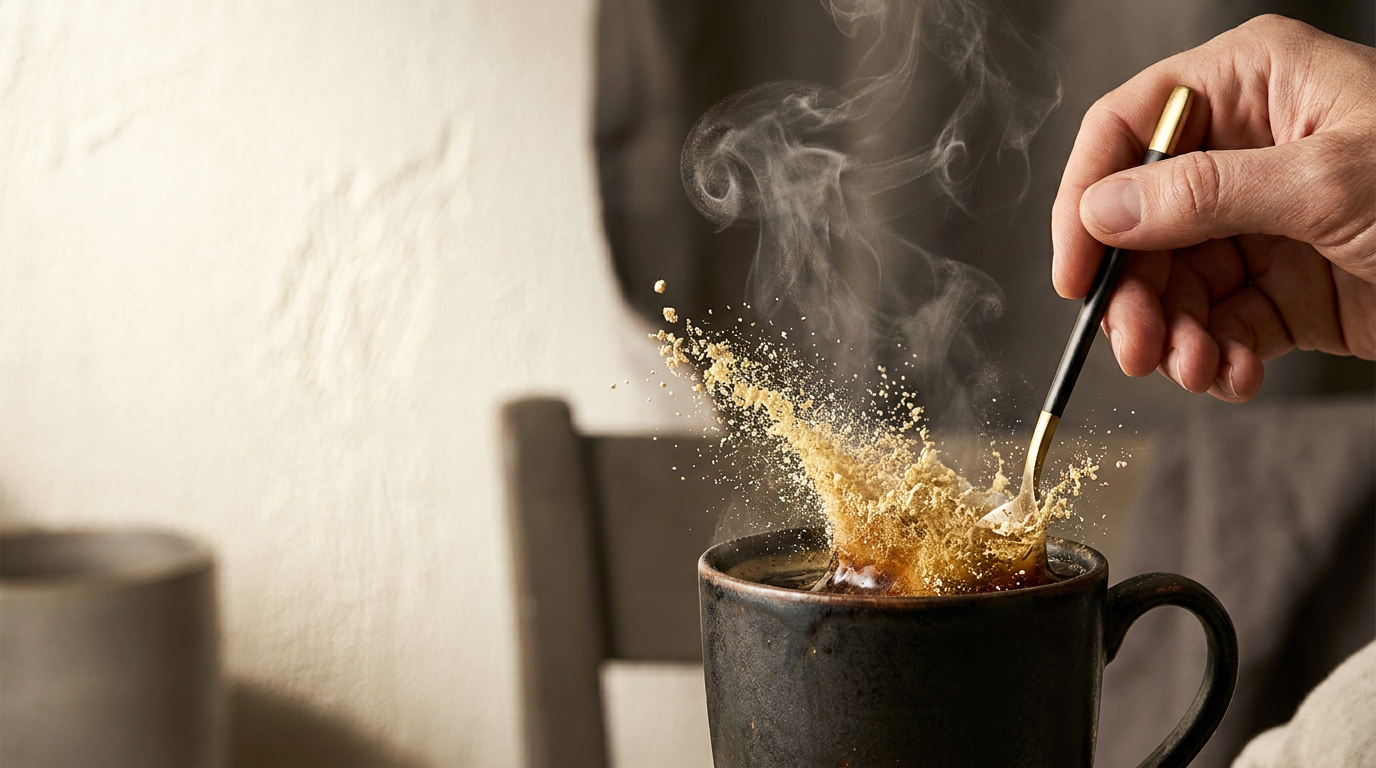
You pour oat drink into hot coffee. Small lumps appear. The surface looks grainy. The texture turns from smooth to broken.
This is called splitting or curdling. It happens to a lot of people.
"I pour it into my coffee and it curdles immediately. Every single time. Switched brands three times and same result. Is hot coffee just not compatible with oat milk?" — competitor review
Hot coffee and oat drink can work together. The split is not random. It has a clear cause. Once you understand the cause, you can stop it.
This guide explains why the split happens. Then it shows you how to prevent it. It also covers a format most oat drinkers have never tried.
Key Takeaways
- Oat drink splits in coffee because heat and acidity break its fats and proteins.
- Hot, acidic coffee and cold oat drink create a temperature and pH shock.
- Barista cartons add stabilisers to reduce splitting. They still split sometimes.
- Warming the oat drink and lowering coffee acidity both reduce the split.
- Fresh-mixed oat drink powder lets you control temperature and ratio at the cup.
What "splitting" actually means
Splitting is separation. The smooth liquid breaks into two parts. You see fat droplets and clumped protein floating in the coffee.
The clumps are not dangerous. They are a physical reaction, not spoilage.
"The curdling of this milk in coffee is a reaction to the heat and acidity, not a sign of spoilage. The texture might not be appealing, but it’s not harmful to consume." — Val Hue, _Content Manager, Writer, and Coffee Enthusiast_
So the split will not make you sick. It just ruins the cup. Nobody wants grainy coffee with floating lumps.
Why hot coffee makes oat drink split
Two things in coffee trigger the split. Heat and acidity.
Oat drink contains fats and proteins. These sit in a stable balance in the carton. Heat and acid break that balance.
"When oat milk is added to hot coffee, the heat can disrupt the delicate balance of fats and proteins in the milk alternative. Unlike dairy milk, oat milk’s plant-based components are more sensitive to temperature changes, leading to curdling or separation." — James Liu, _Beverage Chemist, Specialty Coffee Association_
Coffee is acidic. The acid level matters. Darker roasts are often less acidic than light roasts.
The proteins react to that acid. They clump together. That is the grainy texture you see.
"When the milk encounters the heat and acidity in your cup of coffee, the proteins can sometimes react by coagulating, creating those small, unsightly lumps you see." — Val Hue, _Content Manager, Writer, and Coffee Enthusiast_
Temperature shock plays a role too. Cold oat drink hits very hot coffee. The sudden change makes the split worse.
Researchers have studied this directly with plant-based drinks in coffee.
"Plant-based beverages in substitution of milk are used in coffee preparation, the product may be destabilized due to the heating or coffee addition." — Júlia d’Almeida Francisquini, _Faculty of Pharmacy, Federal University of Juiz de Fora_
So the split is chemistry. Heat plus acid plus a temperature gap. The understanding here also connects to what oat drink actually tastes like and why texture matters so much in coffee.
Why barista cartons still split
Many brands sell a barista edition. These are made to resist splitting.
They do this by adding stabilisers and oils. The stabilisers hold the fats and proteins together under heat.
"The key factor behind oat milk separating in coffee is the interaction between oat milk’s natural sugars and enzymes with coffee’s acidity and heat. Many commercial oat milks are engineered to reduce this effect by adding stabilizers, but homemade or less processed versions often lack these, resulting in visible separation. Adjusting the temperature of the coffee or choosing barista blends of oat milk can mitigate this issue." — Sara Mitchell, _Food Product Developer, Plant-Based Beverage Innovations_
A 2022 U.S. Barista Champion gives similar advice for the carton route.
"“If you’re using alternative milk, definitely look for a coffee-focused or barista-series brand,” says Eckroth." — Morgan Eckroth, _2022 U.S. Barista Champion_
Why powder format avoids the split
Oat drink powder is dry. You mix it with water at the cup. This changes the whole problem.
The split comes from fats, proteins, and temperature shock in a pre-mixed liquid. With powder, you control all three.
OATENTIK oat drink powder contains organic oats and a natural enzyme. That is the full ingredient list. No oils. No gums. No stabilisers.
The enzyme is amylase. It breaks oat starch into natural sweetness during production. This is the same enzyme process the carton industry uses to remove sliminess.
"That sliminess comes from the starches that are in the oats. Now to get rid of those starches, the way that most of these processing plants work, they use an enzyme or sometimes multiple enzymes, but particularly the enzyme amylase." — Mark Stache, _Chef and YouTube Creator_
With powder, you mix only what you need. You mix it warm if you want. You control the ratio for coffee. We explain the full process in how OATENTIK works.
One customer described the difference clearly.
"Finally found a way to drink my coffee without dairy and without all the additives. Made my first cup with oat drink powder this morning. Mixed in 20 seconds, frothed beautifully, no weird taste. This is actually what I was looking for all along." — competitor review
There is a flavour benefit too. Some carton oat drinks taste like porridge in coffee.
"It makes my coffee taste like a bowl of porridge. I like oat milk but I don't want to drink porridge coffee. I've tried warming it, not warming it, frothing it, not frothing it. Still tastes like porridge." — competitor review
A fresh mix from clean ingredients gives you more control over that flavour.
How to mix oat drink powder for coffee
Here is a simple method for coffee that resists splitting.
For adding to hot coffee directly: Add 1 to 2 teaspoons of powder straight into your coffee. Stir well. The powder dissolves into the hot liquid. There is no cold-liquid shock. For a creamy cup mixed first: Mix 20g of powder with 200ml of water. This is the standard ratio for one cup. Use warm water to match your coffee temperature. Then combine. For a thicker, latte-style cup: Use a higher powder ratio. Add more powder to the same water. This gives a richer texture. It steams and froths well at higher mix ratios. For foam: Use a frother with your mixed oat drink. A higher powder ratio gives a more stable foam.The key advantage is temperature control. You mix with warm water. You skip the cold-to-hot shock that causes the worst splits.
Common mistakes to avoid
Mistake 1: Pouring cold liquid into very hot coffee. This is the main cause of the split. Match temperatures instead. Mistake 2: Using very acidic coffee. Light roasts and certain origins are more acidic. They split oat drink more easily. Mistake 3: Adding too little powder. A thin mix splits more easily. A richer mix holds together better. Mistake 4: Dumping oat drink in all at once. A slow pour or a gentle stir reduces shock. Add it gradually. Mistake 5: Assuming barista cartons solve everything. They reduce splitting. They add cost and ingredients. They still split sometimes.Get the right tools
The powder method is simple. You only need a few things.
You need the powder. You need a shaker for cold mixing. You need a scoop for the right ratio. A frother helps for foam.
The OATENTIK starter set includes two pouches. Your first order also includes a free shaker and a free scoop. Two pouches make 16 liters of oat drink.
Pricing is simple. One pouch is 24 €. That is 3.00 €/L. Two pouches are 46 €. Four pouches are 88 €, the lowest price per liter.
Oh, and the format uses far less packaging. One 17g pouch replaces eight cartons. That is 93% less packaging material for the same 8 liters. We cover that in detail in the powder versus carton comparison.
You can try the oat drink powder and mix your first cup the way that suits your coffee.
Frequently asked questions
Why does my oat drink split in hot coffee? Heat and acidity break the balance of fats and proteins in the oat drink. Cold oat drink poured into hot coffee also creates temperature shock. Both effects cause the clumping you see. Is split oat drink safe to drink? Yes. The split is a physical reaction to heat and acidity. It is not spoilage. The texture is unpleasant but the drink is not harmful. Do barista oat drinks stop splitting? They reduce it. Barista cartons add stabilisers and oils to hold the mix together under heat. They cost more and still split sometimes, especially with very hot or very acidic coffee. How does oat drink powder avoid splitting? You mix powder fresh with water at the cup. You can use warm water to match your coffee. This removes the cold-to-hot shock. You also control the ratio for a richer, more stable mix. What is the best ratio of oat drink powder for coffee? Use 20g of powder to 200ml of water for a standard cup. For coffee, you can add 1 to 2 teaspoons of powder straight into the cup, or use a richer mix for a latte-style texture.OATENTIK uses only organic oats and a natural enzyme. No oils. No gums. No added sugar. Try it →
Sources & Methodology
All expert references and research citations were verified as of April 2026. Studies are linked inline. We update this article when new evidence emerges. If you notice any inaccuracies, contact us at info@oatentik.com.
Disclosure: OATENTIK is our product. We cite independent research and expert commentary about oat drink behaviour in coffee, not about OATENTIK specifically. We have not lab-tested per-serving foam or split performance. See our methodology above.
Primary research:
- d’Almeida Francisquini et al. 2023, European Food Research and Technology, on destabilisation of plant-based beverages in coffee.
Expert commentary:
- James Liu, Beverage Chemist, Specialty Coffee Association, on heat and fat-protein balance.
- Sara Mitchell, Food Product Developer, on stabilisers and acidity interaction.
- Morgan Eckroth, 2022 U.S. Barista Champion, on choosing barista-series alternatives.
- Val Hue, Coffee Enthusiast, on protein coagulation, warming, and safety.
- Mark Stache, Chef and YouTube Creator, on amylase and oat starch.