








Oat Drink Powder vs Carton Oat Milk: The Real Difference


Quick Verdict: Powder vs Carton in One Paragraph
Carton oat milk is convenient at the supermarket and instantly pourable at home. Oat drink powder is lighter to ship, lasts longer on the shelf, and gives you control over how much you mix at once. If you drink oat drink every day and care about ingredient lists, price per liter, or storage space, powder usually wins. If you want something you can grab on the way home and pour straight into cereal without thinking, a carton is hard to beat.
This article compares both formats fairly. We look at ingredients, price per liter, shelf life, foam, and packaging. Where OATENTIK is relevant, we say so. Where a carton wins, we say that too.
Side-by-Side Comparison Table
| Category | Oat Drink Powder (OATENTIK) | Carton Oat Milk (typical EU brand) |
|---|---|---|
| Ingredients | Organic gluten-free oats + α-amylase enzyme | Water, oats, oils, stabilisers, salt, vitamins, minerals |
| Format | Dry powder, mix with water | Ready-to-drink liquid |
| Price per liter | 2.20 to 3.00 € | ~1.50 to 3.00 € EU retail price range for branded oat drink approximately 1.50 to 3.00 € per liter |
| Shelf life unopened | 24 months at room temperature | 6 to 12 months (UHT) or refrigerated (fresh) |
| Shelf life after opening / mixing | Mixed drink: use within 3 days. Dry pouch: 24 months. | 5 to 7 days refrigerated |
| Packaging per 8 liters | 17g (one pouch) | ~240g (eight cartons, ~30g each) |
| Recyclability | Multi-layer laminate, not fully recyclable yet | Partially recyclable, ~51% EU rate EU recycling rate for beverage cartons ~51% |
| Availability | Online direct-to-consumer | Most supermarkets across the EU |
| Portion control | Mix any amount from one cup upward | Fixed 1L unit, must use or refrigerate |
| Cold chain needed | No | Yes (fresh) or no (UHT) |
Ingredients: Where the Two Formats Actually Differ
The biggest practical difference between powder and carton is what is on the ingredient list.
A typical EU carton oat drink is made by blending oats with water, adding oil (usually rapeseed or sunflower) for mouthfeel, and using stabilisers like dipotassium phosphate, gellan gum, or locust bean gum to stop the drink from separating in the carton. Many cartons also add salt, calcium, and B12. Barista editions usually contain more oil than standard versions to help with foam stability.
This is not unique to one brand. It is how the format works. A liquid sitting in a carton for 6 to 12 months needs help staying mixed.
Customers notice the gap between front-of-pack and back-of-pack:
"Why does it say oat milk on the front but then I read the label and there is rapeseed oil and sunflower lecithin in there. I thought I was buying oats."
Powder formats avoid most of this because the product is dry and shelf-stable on its own. OATENTIK is made from organic gluten-free oats and a natural enzyme (α-amylase) that breaks down oat starch into natural sugars during processing. After spray-drying, you have a powder that mixes with water on demand. No oils, no gums, no preservatives.
That same enzymatic process is why the powder tastes naturally sweet without added sugar. The 20.8g of sugars per 100g on the nutrition label are released from the oat's own starch, not added afterwards. We explained the enzymatic process behind oat drinks in detail in a separate article.
Price Per Liter: A Closer Look
Carton oat drink in EU supermarkets ranges roughly from 1.50 € per liter for store-brand basic to around 3 € per liter for premium barista editions. Prices vary widely by country and retailer.
OATENTIK powder works out as follows when mixed at the recommended ratio (20g powder in 200ml water):
- 1 pouch (800g): 24 € → 3.00 €/L
- 2 pouches: 46 € (23 €/pouch) → 2.88 €/L
- 4 pouches: 88 € (22 €/pouch) → 2.75 €/L
- 4-pack on subscription: ~70.40 € → 2.20 €/L
So at the single-pouch price, powder sits at the upper end of carton pricing. At the 4-pack subscription price, it lands below most branded cartons but above basic store brands.
The bigger price story is what gets thrown away. Many drinkers reach the same point:
"Costs about 3 euros per liter at my supermarket and I go through maybe 2 liters a week. That is over 300 euros a year just on oat milk. Starting to feel like a luxury."
If you finish every carton you open, the price-per-liter number is the price you actually pay. If you throw out half a carton every week or two, your real cost per consumed liter is higher than the label suggests.
"Plant milk is regarded as an eco-friendly option to dairy milk, but the packaging is creating an environmental disaster. The problem lies in two places — first, liquid plant milks are over 90% water by volume, increasing the packing and transportation emissions produced." — Monash Innovation, _Monash University innovation hub_
Shipping water is also part of why carton oat drink costs what it costs.
Shelf Life and Waste
This is the area where the two formats differ most for single-person households and occasional drinkers.
A carton of fresh oat drink typically keeps 5 to 7 days in the fridge after opening. UHT cartons last a similar window once opened. If you only use oat drink for weekend coffee or the odd smoothie, that window is short.
"It says best before 8 months from now but it's already been open a week and it smells weird. The instructions say use within 5 days once opened. That's basically useless for a single person."
Powder works differently. The dry pouch is stable for 24 months unopened at room temperature. After opening, the powder itself stays good as long as you reseal the pouch and keep it dry. You mix only what you want to drink, so the "open carton in the fridge" problem disappears. Mixed drink should be used within 3 days.
"One of the key advantages of powdered plant milk is its extended shelf life compared to liquid alternatives. This reduces food waste and allows for greater flexibility in storage for consumers." — FoodProcessing.com.au Staff, _Editorial Staff_
For more on how long cartons actually last and the signs they have gone off, see our guide to oat milk shelf life.
Taste, Foam, and How They Behave in Coffee
Both formats can taste good. Both can also disappoint.
Carton oat drinks vary a lot. Standard versions often split in hot coffee because the oil and water emulsion is not stable enough for the acid and heat of espresso. Barista editions add more oil and sometimes extra stabilisers to fix this, which is why they froth better but cost more and have longer ingredient lists.
"Bought the barista edition because regular always splits in my coffee. The barista version costs nearly double and still splits about a third of the time. Exhausting."
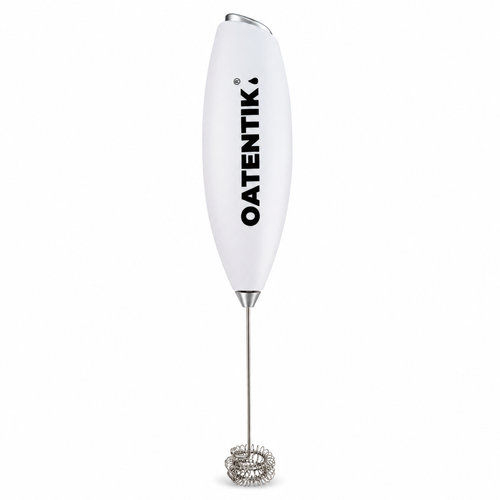
Powder oat drinks behave differently in coffee because you control the mix ratio. A thicker mix (more powder per ml of water) gives more body and better foam. OATENTIK is heat and cold stable, which means it does not split when stirred into hot espresso. With a handheld frother, the mix steams and froths well at higher concentrations.
For smoothies and baking, both formats work. Some carton drinks dominate the flavor of a smoothie because of the oil and gum content. Powder, mixed thinner or stirred in dry, tends to disappear into the other flavors.
A customer who switched put it this way:
"Finally found a way to drink my coffee without dairy and without all the additives. Made my first cup with oat drink powder this morning. Mixed in 20 seconds, frothed beautifully, no weird taste. This is actually what I was looking for all along."
That is one person's experience, not a guarantee. Foam quality depends on your frother, your coffee, and how thick you mix the powder.
Packaging and Transport
This is the section most articles skip, and it is where powder has the clearest advantage.
One OATENTIK pouch weighs 17g and makes 8 liters of oat drink. Eight 1-liter cartons weigh around 240g of packaging in total. That is roughly 93% less packaging material for the same amount o
f drink.
"Lugging 4 cartons home from the supermarket every week because they are so heavy and take up so much fridge space. My partner thinks I am running a small dairy operation."
Transport works the same way. A carton is over 90% water by volume. Shipping a liter of oat drink across Europe means shipping a liter of water in a carton. Shipping 800g of powder ships the same drinkable volume without the water.
"The powdered format significantly reduces the weight and volume of the product, leading to substantial reductions in transport-related emissions. This also means less packaging material is needed, further contributing to a lower environmental footprint." — FoodProcessing.com.au Staff, _Editorial Staff_
A fair note on recycling. Cartons are marketed as recyclable, and the paper fraction (about 75% of a carton
) is genuinely recycled in many EU countries. The plastic and aluminum layers are harder to process and the EU average recycling rate for beverage cartons is about 51%.
EU recycling rate for beverage cartons ~51%
The OATENTIK pouch is not better here. It is a multi-layer laminate (BOPP, PET, LDPE) and is not easily recycled in most municipal systems. We say this clearly because it matters. The case for powder is volume reduction and avoided transport weight, not recyclability.
"Plant-based milks on average generate roughly one-third or less of the greenhouse gas emissions of cow's milk, and most use considerably less water." — Raychel Santo, _Senior Food and Climate Research Associate_
Both formats are lower-impact than dairy. Within plant drinks, powder reduces packaging and transport further.
Who Should Choose Carton
A carton is the better choice if:
- You buy oat drink at the supermarket on your regular shop and do not want to order online.
- You drink oat drink quickly (a liter every 2 to 3 days) so the open-fridge window is not an issue.
- You want a fixed product with no mixing, no measuring, and no thinking.
- You prefer a specific barista edition for foam and you finish each carton.
Carton wins on instant availability and zero-effort use. That is real value.
Who Should Choose Powder
Powder is the better choice if:
- You read ingredient labels and want fewer items on the list.
- You live alone or in a small household and have wasted half-cartons before.
- You drink oat drink in cups, not liters, and want to mix the exact amount.
- You travel, work from different places, or do not want oat drink taking up fridge space.
- You order online anyway and prefer fewer trips to the shop.
- You care about packaging volume per liter consumed.
If you fit several of those, powder is likely the better format for you. You can see for yourself with a single pouch first before committing to a larger pack.
How Powder and Carton Compare to Other Plant Drinks
Format is one decision. Base ingredient is another. If you are also weighing oat against almond, soy, or rice, we compared oat milk versus almond milk in a separate article.
For full nutrition details on oat-based drinks, see our oat milk nutrition guide.
FAQ
Is oat drink powder the same as instant oat milk? Yes. "Oat drink powder" and "instant oat milk" describe the same category. The product is dry oat powder you mix with water. OATENTIK uses only organic gluten-free oats and a natural enzyme. Does oat drink powder taste different from carton oat milk? The taste comes from the oats and the process. OATENTIK is naturally sweet because the enzymatic process releases sugars from the oat's own starch. Cartons often add oil for mouthfeel, which gives a slightly different texture. Many drinkers find powder closer to a clean oat flavor and cartons closer to a richer, fattier one. Does powder work in hot coffee without splitting? Powder formats can be more stable in hot coffee because there is no pre-made oil-and-water emulsion to break. OATENTIK is heat and cold stable when mixed at the recommended ratio. Mix thicker for foam and lattes, thinner for cereal and tea. Why does carton oat milk contain oil and powder does not? Carton oat drink is a liquid that needs to stay mixed and stable for months. Oil and stabilisers do that job. Powder does not need either because the product is dry until you mix it. You add water at home and drink it fresh. Is oat drink powder cheaper than carton oat milk? It depends on pack size and where you shop. OATENTIK costs 2.20 to 3.00 € per liter depending on pack and subscription. Branded carton oat drink in EU supermarkets ranges roughly 1.50 to 3.00 € per liter. Powder is usually cheaper than premium barista cartons and similar to or above basic store brands. Is the packaging actually better? Yes for volume, no for recyclability. One 17g pouch makes 8 liters. Eight cartons weigh around 240g of packaging. The pouch is multi-layer laminate and is not easily recyclable in most EU systems. The advantage is less material per liter consumed, not better recycling. Can I use oat drink powder for baking and smoothies? Yes. Mix it with water first, or add the dry powder directly to a smoothie or batter. The neutral oat flavor blends into most recipes.Sources and Methodology
All ingredient and pricing data was collected from official EU product packaging, brand websites, and retail listings as of April 2026. OATENTIK product and pricing data is from our verified product specification (April 2026). We update this article when prices or formulations change. If you notice an inaccuracy, please contact us at info@oatentik.com.
Disclosure: OATENTIK is our product. We have included it in this comparison because it fits the category. We aim to be fair and have stated where carton oat milk wins (availability, instant pourability) as clearly as where powder wins (ingredients, shelf life, packaging volume).
Citations referenced in this article:
- ACE (Alliance for Beverage Cartons and the Environment) industry data on EU carton recycling rates (~51%), accessed April 2026
- Monash Innovation commentary on liquid plant drink packaging and water content, Monash University innovation hub
- FoodProcessing.com.au editorial coverage of powdered plant milk shelf life and transport emissions
- World Resources Institute insights on plant-based milk environmental impact (Raychel Santo, Senior Food and Climate Research Associate)
OATENTIK uses only organic gluten-free oats and a natural enzyme. No oils. No gums. No added sugar. Try the oat drink powder →