








How to Use Oat Drink Powder in Coffee (The Complete Guide)

How to Use Oat Drink Powder in Coffee
Oat drink powder is dry oat drink concentrate. You add water and stir. The result is a fresh oat drink, ready in seconds. In coffee, it behaves differently than carton oat milk. You have three options: mix it first, stir it directly into your cup, or froth it for a cappuccino.
This guide covers the exact ratios, the right order of steps, and why powder does not split in hot coffee the way many carton oat drinks do.
How to prepare it for coffee (3 methods)
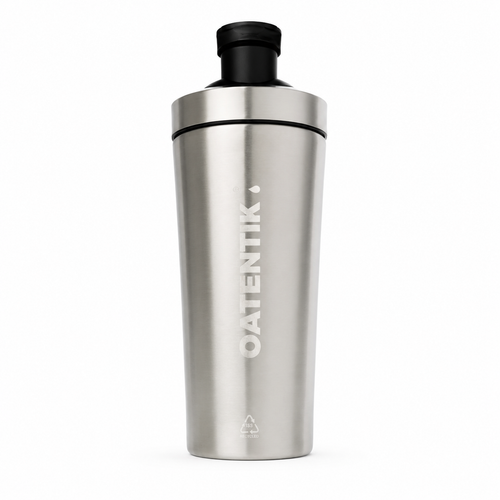
Method 1: Shaker bottle (fastest)
Add powder and cold water to a shaker bottle. Shake for 10 seconds. Pour into coffee.
This is the weekday morning method. Takes 30 seconds. The shaking action creates a light, natural foam on top that holds well when poured over espresso.
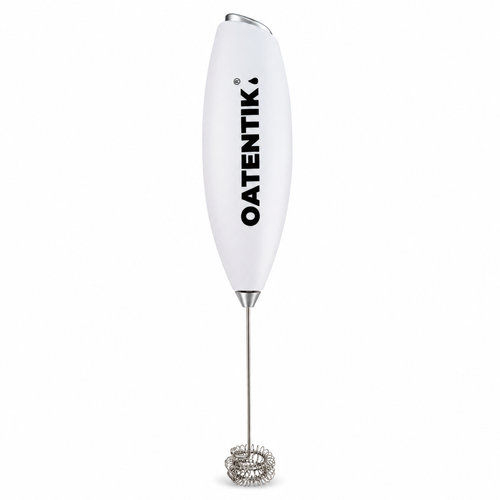
Method 2: Milk frother (best foam)
Mix powder and water in a cup. Use a handheld milk frother for 15-20 seconds.
This produces the densest foam — closer to what you'd get from a coffee shop steam wand. If you're making lattes or cappuccinos at home, this is the method to use.
Method 3: Blender (smoothest texture)
Blend powder and water for 10-15 seconds in a standard blender.
This gives the smoothest, most consistent result with zero graininess. Ideal if you're making a larger batch for the day or for multiple people.
Hot coffee vs. iced coffee
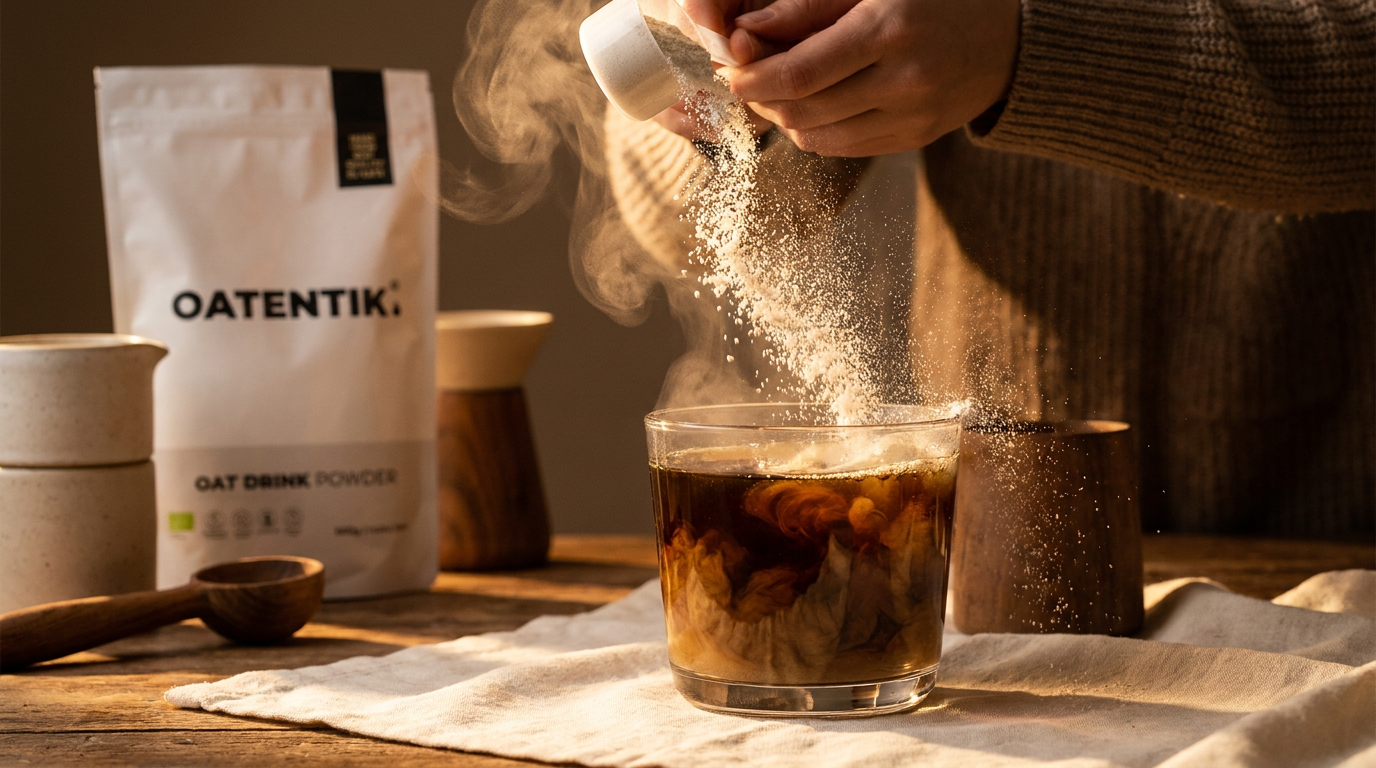
Hot coffee: Mix the powder with room-temperature or warm water first, then add to hot coffee. Don't add dry powder directly to hot coffee — it can clump. Pre-mixing takes 10 seconds and gives you a smooth result every time.
Iced coffee: Mix powder with cold water in a shaker. Shake well. Pour over ice, then add espresso. The cold water actually dissolves the powder easily, and the result is a clean, creamy iced latte without the gummy texture that some carton oat milks develop when cold.
The Problem with Coffee and Plant Drinks
Anyone who drinks coffee with a plant alternative knows the issue. You pour, you stir, and you get small white flakes floating on top. The drink looks broken. The texture turns chalky.
"I pour it into my coffee and it curdles immediately. Every single time. Switched brands three times and same result. Is hot coffee just not compatible with oat milk?"
This is called splitting. It happens because most carton oat drinks contain added oils (often rapeseed oil) and emulsifiers that hold the oil and water together. When the drink hits hot, acidic coffee, the emulsion breaks. The oil separates. You see flakes.
Some brands sell a "barista edition" with extra stabilisers to fight this. It works some of the time and costs more.
"Bought the barista edition because regular always splits in my coffee. The barista version costs nearly double and still splits about a third of the time. Exhausting."
Powder works differently. There is no pre-mixed emulsion. You add the powder to water (or directly to coffee) and it dissolves into a uniform liquid. There are no oil droplets to separate because there is no added oil in the first place.
OATENTIK contains exactly two things: organic gluten-free oats and a natural enzyme (α-amylase) that breaks the oat starch into a creamy, naturally sweet powder. Nothing else.
"Heat & cold stable. No split in hot drinks, no slime over ice. Works every time." — OATENTIK®, _Manufacturer of OATENTIK® Organic Oat Drink Powder_
Why it doesn't curdle in coffee
One of the common complaints about plant milks in coffee is curdling — those ugly clumps that form when cold plant milk hits hot, acidic coffee.
Commercial oat milks solve this with dipotassium phosphate, an acidity regulator that prevents the proteins from coagulating.
Oat drink powder handles this differently. Because you're mixing fresh each time, the oat proteins are in a more stable state than those in a carton that's been sitting for weeks. Pre-mixing with room-temperature water before adding to coffee prevents temperature shock, which is the main cause of curdling.
In practice: we've never had a batch curdle using the pre-mix method.
Espresso, filter, French press — does it matter?
The coffee method changes what ratio works best:
Espresso-based drinks (latte, cappuccino, flat white): Use 13-15g per 100ml. You need more body to stand up to concentrated espresso.
Filter/drip coffee: Use 10-12g per 100ml. Filter coffee is less intense, so a lighter oat drink complements rather than overwhelms.
French press: Use 12-13g per 100ml. French press produces a full-bodied coffee that pairs well with medium-concentration oat drink.
Cold brew: Use 12-15g per 100ml with cold water. Cold brew is naturally smooth and low-acid, so curdling is never an issue.
The taste difference vs. barista oat milk
Let's be direct about this.Barista oat milks (Oatly Barista, Minor Figures, etc.) are specifically engineered for coffee. They contain oils that add richness and create the dense microfoam that baristas love.
Oat drink powder produces a lighter, cleaner result. The foam is slightly less dense. The mouthfeel is less heavy.
For some people, this is a downside. For others — especially those who moved to oat milk because they wanted something clean — it's the whole point.
The ingredient list for barista oat milk: water, oats, rapeseed oil, dipotassium phosphate, calcium, salt, vitamins.
The ingredient list for oat drink powder: organic oats, enzyme.
That's the trade-off. You decide which matters more to you.
The one-week test
If you're considering switching from carton oat milk to powder for your daily coffee, here's what we suggest:
Day 1-2: Start at 12g per 100ml. This is deliberately lighter than what you're used to. Get familiar with the mixing process.
Day 3-4: Move to 14-15g per 100ml. This is where most coffee drinkers settle. Noticeably creamier, with more foam.
Day 5-7: Try the frother method if you haven't already. This is the moment where most people stop comparing it to carton oat milk and start preferring it.
By the end of the week, you'll know your ratio, your method, and whether this works for your coffee routine.
Most people don't go back.
OATENTIK uses only organic gluten-free oats and a natural enzyme. No oils. No gums. No added sugar. One 800g pouch makes 8 litres of fresh oat drink, mixed by the cup or by the jug. Try the organic oat drink powder →